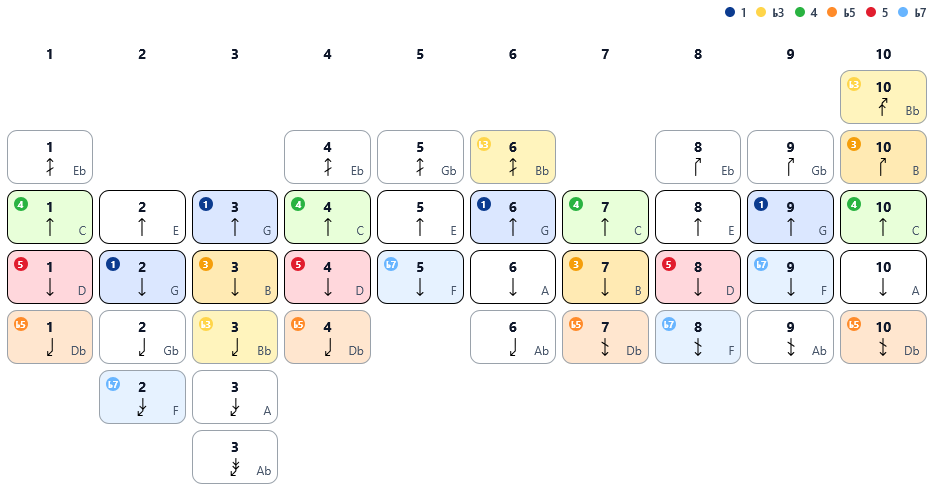
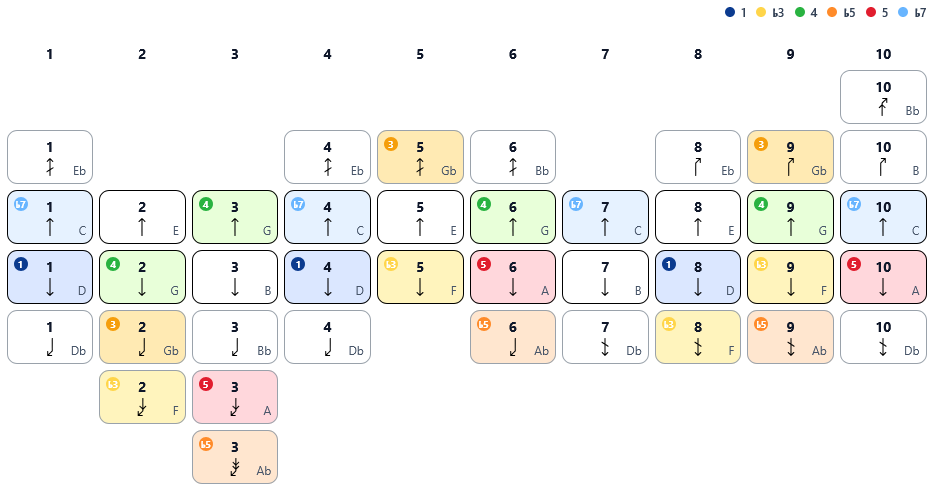
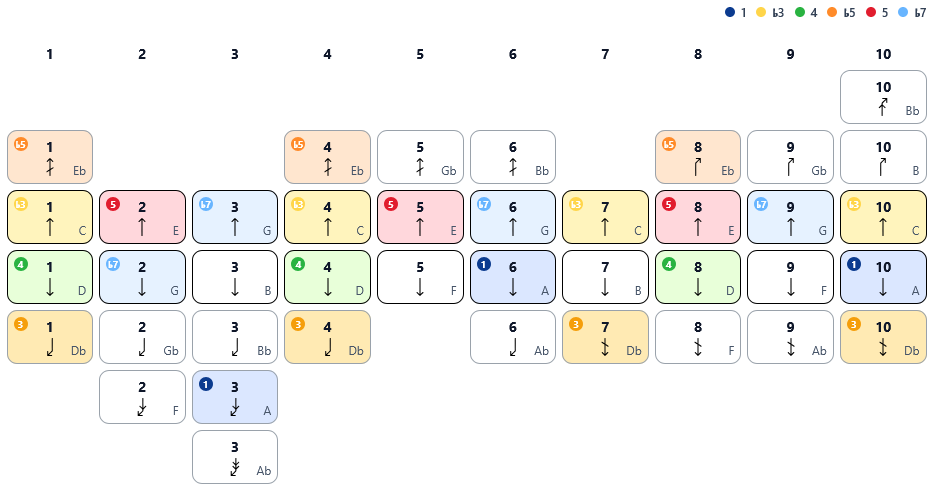
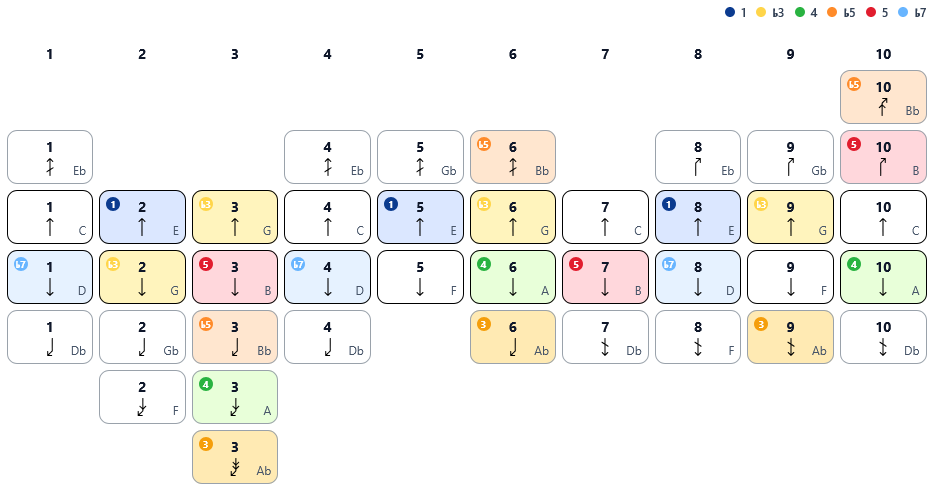
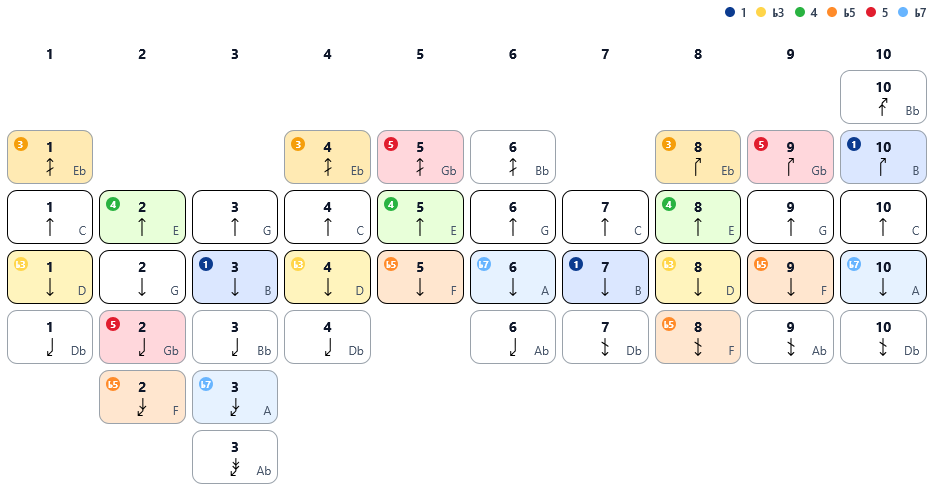
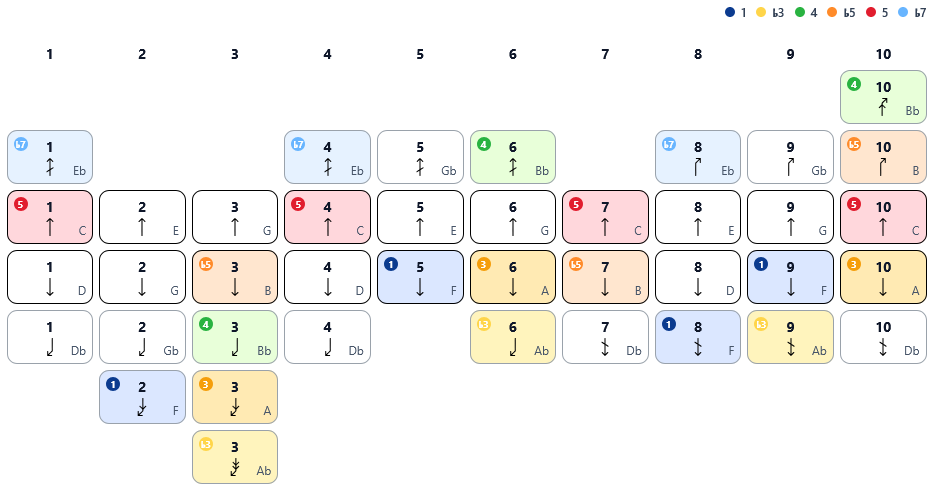
Select the harp key of your harmonica.
The Position Finder will automatically display the keys for all 12 positions.
You can also adjust individual positions — the harp key will update accordingly.
Position Explanations (Example: C Harmonica)
1st Position – Straight Harp (Key: C)
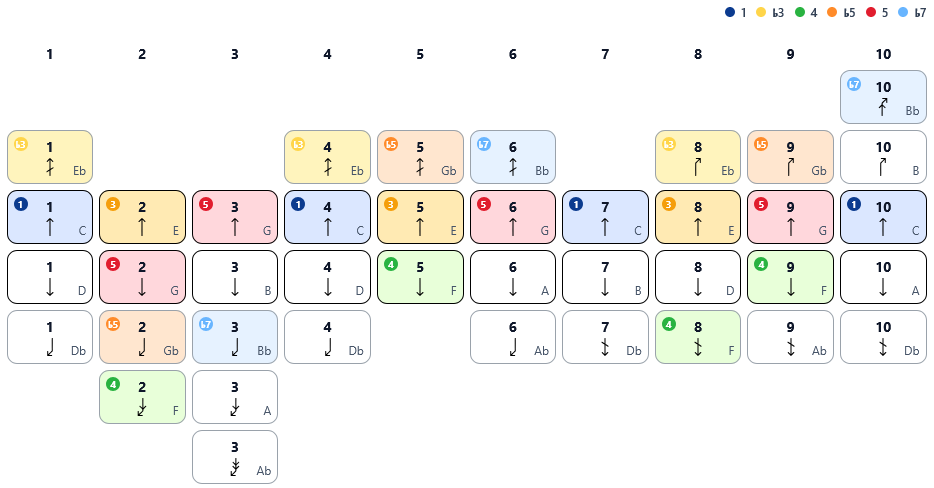
Rootnotes: 1 Blow, 4 Blow, 7 Blow, 10 Blow Scale: Ionian (Major) – C D E F G A B C Sound: Bright, open, melodic. Usage: Folk, Pop, Country. Character: Clear melodies through blow notes; little bending required.
2nd Position – Cross Harp (Key: G)
Rootnotes: 2 Draw, 3 Blow, 6 Blow, 9 Blow Scale: Mixolydian – G A B C D E F G Sound: Powerful, rough, bluesy. Usage: Blues, Rock, Country. Character: Root on draw holes; expressive draw bends; the standard blues position.
3rd Position – Double Cross (Key: D)
Rootnotes: 1 Draw, 4 Draw, 8 Draw Scale: Dorian – D E F G A B C D Sound: Minor-colored but open. Usage: Minor blues, modal jazz. Character: Expressive and flexible; popular for minor tunes.
4th Position (Key: A)
Rootnotes: 3 Draw (1 Bend), 6 Draw, 10 Draw Scale: Aeolian (Natural Minor) – A B C D E F G A Sound: Dark, melancholic. Usage: Soul, Jazz, Ballads. Character: Soft, singing lines through half-step draw bends.
5th Position (Key: E)
Rootnotes: 2 Blow, 5 Blow, 8 Blow Scale: Phrygian – E F G A B C D E Sound: Exotic, mysterious. Usage: Latin, modal pieces. Character: Root on blow notes; colorful tones through draw bends.
6th Position (Key: B)
Rootnotes: 3 Draw, 7 Draw, 10 Blow (1 Blowbend) Scale: Locrian – B C D E F G A B Sound: Tense, experimental. Usage: Jazz, Fusion, modal improvisation. Character: Requires precise control of full bends and overblows.
12th Position (Key: F)
Rootnotes: 2 Draw (1 Bend), 5 Draw, 9 Draw Scale: Lydian – F G A B C D E F Sound: Funky, light, modern.
Usage: Jazz-Blues, Swing, Fusion. Character: Bright, floating sound due to the Lydian scale.