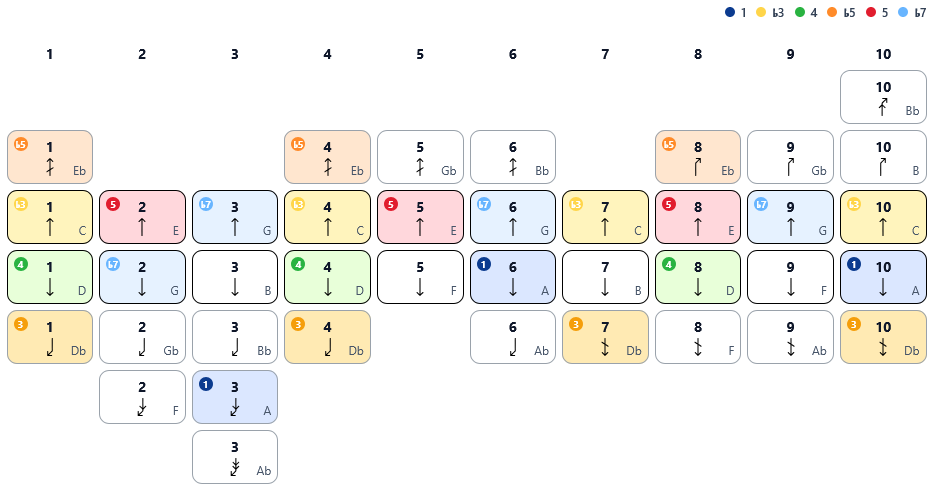
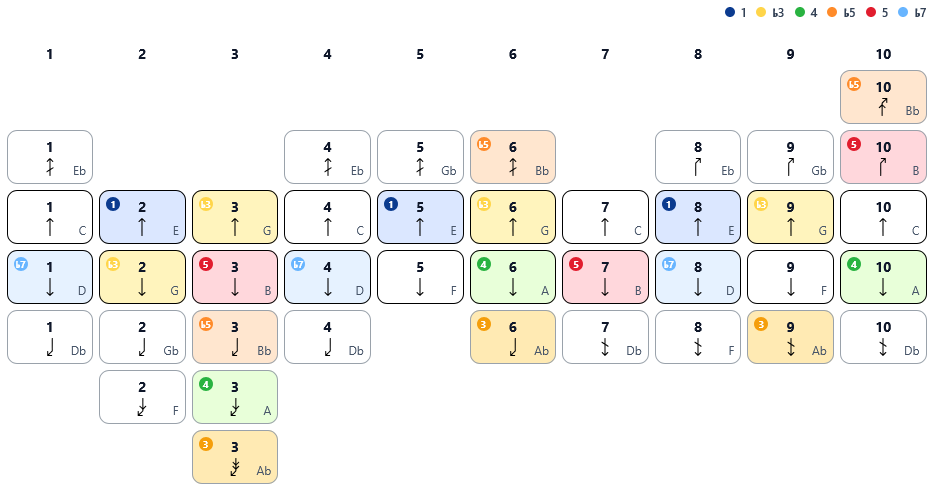
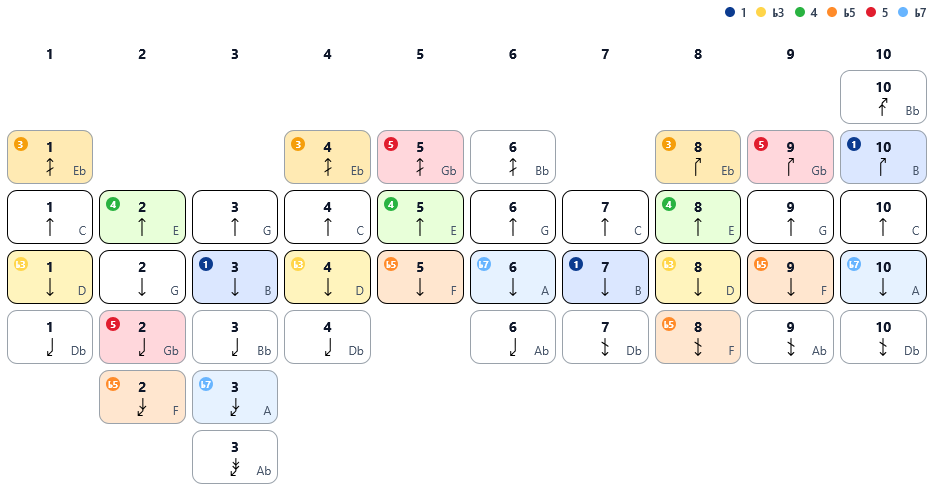
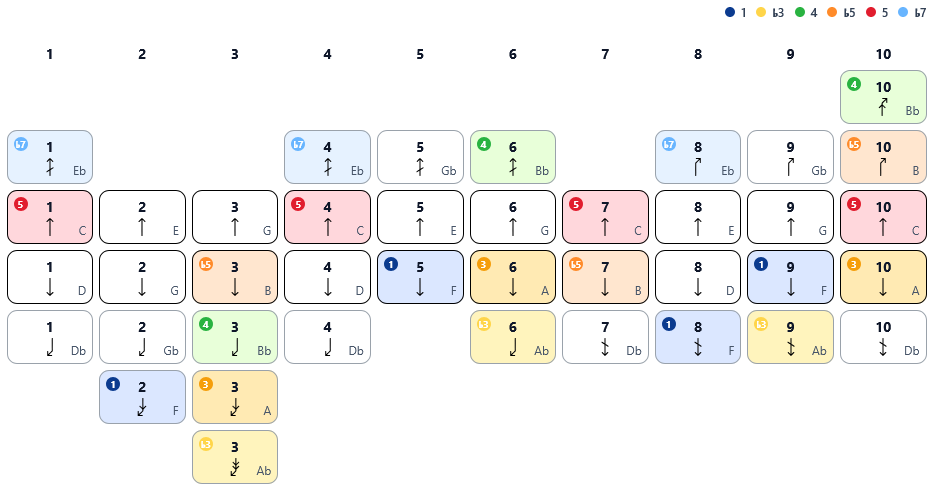
Wähle den Harp-Key deiner Mundharmonika aus.
Der Position Finder zeigt dir automatisch die Tonarten aller 12 Positionen an.
Du kannst auch einzelne Positions-Tonarten anpassen – der Harp-Key aktualisiert sich dann entsprechend.
Positionserklärungen (Beispiel: C-Harp)
1st Position – Straight Harp (Tonika: C)
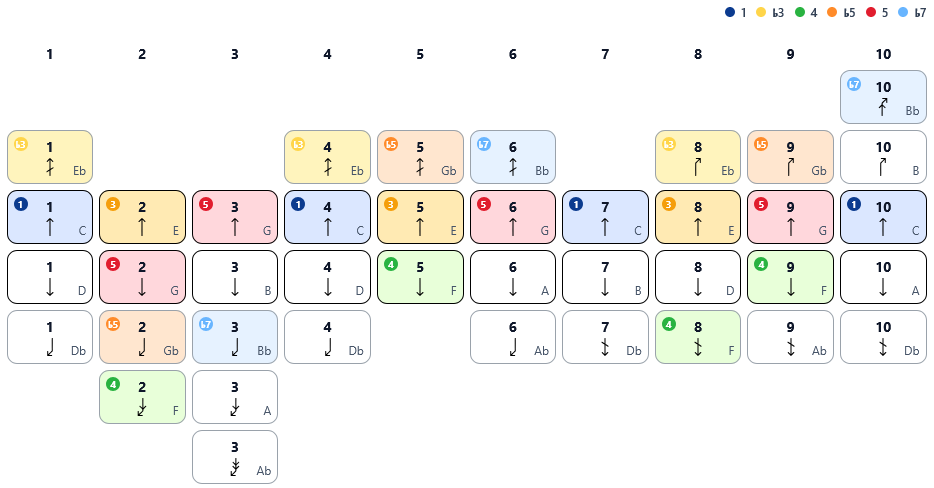
Rootnotes: 1 Blow, 4 Blow, 7 Blow, 10 Blow Tonleiter: Ionisch (Dur) – C D E F G A B C Klang: Hell, offen, melodisch. Verwendung: Folk, Pop, Country. Charakter: Klare Melodien über Blow-Kanäle; kaum Bendings nötig.
2nd Position – Cross Harp (Tonika: G)
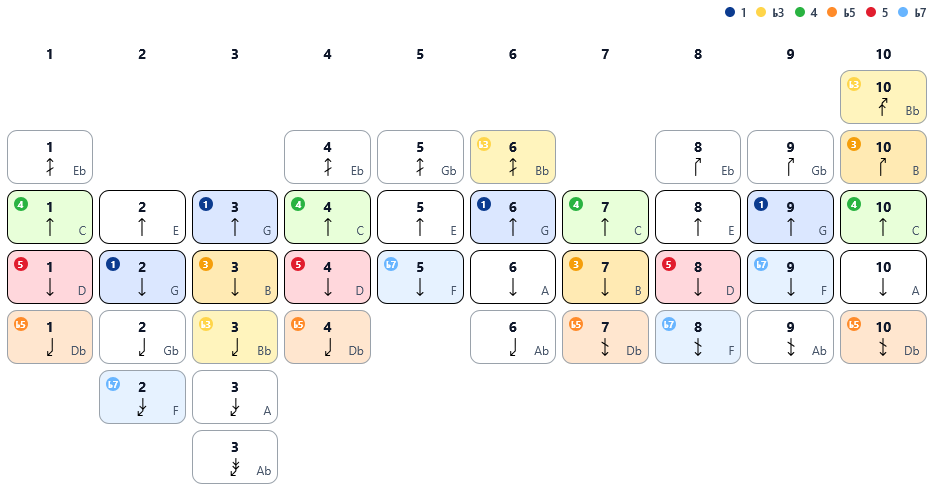
Rootnotes: 2 Draw, 3 Blow, 6 Blow, 9 Blow Tonleiter: Mixolydisch – G A B C D E F G Klang: Kraftvoll, rau, bluesig. Verwendung: Blues, Rock, Country. Charakter: Tonika auf Draw-Kanälen; viele expressive Draw-Bends; Standard-Blues-Position.
3rd Position – Double Cross (Tonika: D)
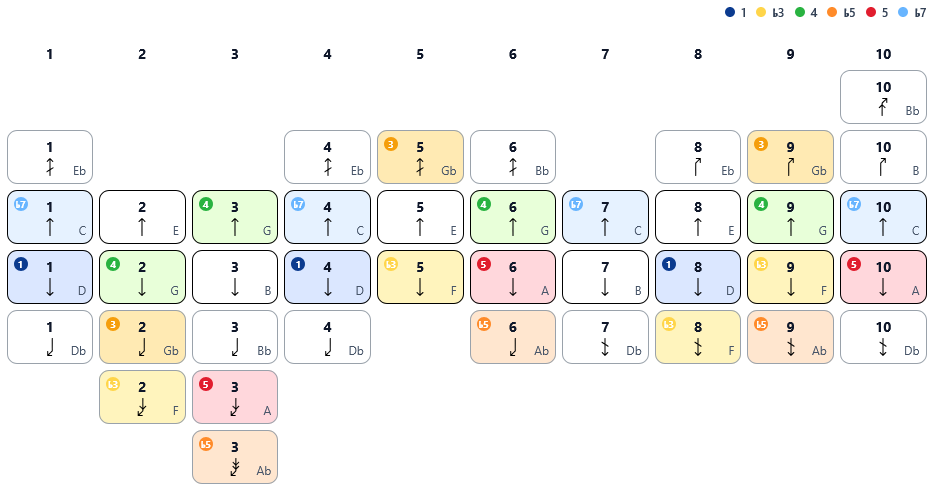
Rootnotes: 1 Draw, 4 Draw, 8 Draw Tonleiter: Dorisch – D E F G A B C D Klang: Mollig, aber offen. Verwendung: Minor-Blues, modaler Jazz. Charakter: Ausdrucksstark und flexibel; beliebt für Moll-Tunes.
4th Position (Tonika: A)
Rootnotes: 3 Draw (1 Bend), 6 Draw, 10 Draw Tonleiter: Aeolisch (natürliches Moll) – A B C D E F G A Klang: Dunkel, melancholisch. Verwendung: Soul, Jazz, Balladen. Charakter: Weiche, singende Linien über halbe Draw-Bends.
5th Position (Tonika: E)
Rootnotes: 2 Blow, 5 Blow, 8 Blow Tonleiter: Phrygisch – E F G A B C D E Klang: Exotisch, mystisch. Verwendung: Latin, modale Stücke. Charakter: Tonika auf Blow-Kanälen; viele farbige Töne durch Draw-Bends.
6th Position (Tonika: B)
Rootnotes: 3 Draw, 7 Draw, 10 Blow (1 Blowbend) Tonleiter: Lokrisch – B C D E F G A B Klang: Spannungsvoll, experimentell. Verwendung: Jazz, Fusion, modale Improvisation. Charakter: Präzise Kontrolle bei Full-Bends und Overblows erforderlich.
12th Position (Tonika: F)
Rootnotes: 2 Draw (1 Bend), 5 Draw, 9 Draw Tonleiter: Lydisch – F G A B C D E F Klang: Funky, leicht, modern.
Verwendung: Jazz-Blues, Swing, Fusion. Charakter: Heller, schwebender Klang durch die lydische Tonleiter.